Media Tech Festival 26/3-26 in Odense (MCO) – sustainability panel
Heidi Philipsen – SDU, speech
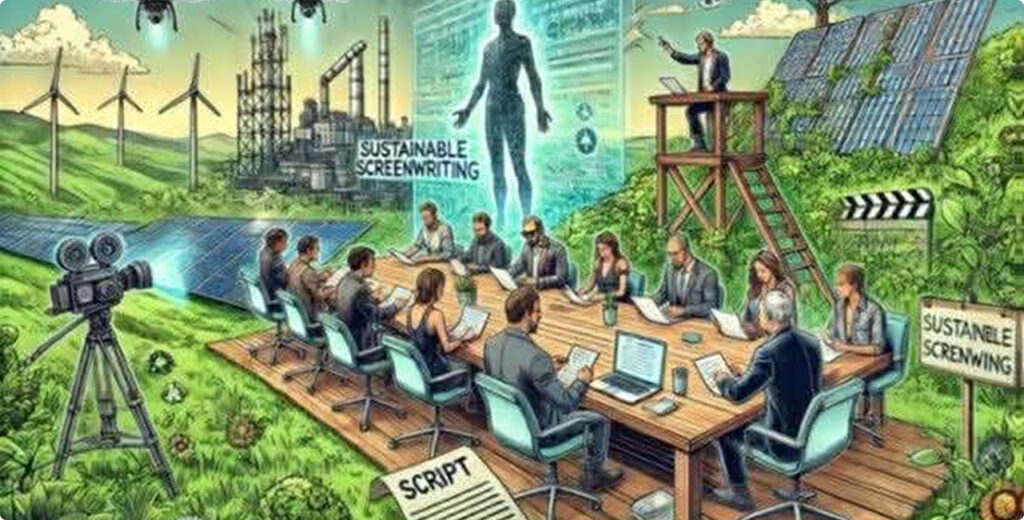
I am Associate Professor at Media Studies from SDU, and also head of an education called Screen Play Development. I have been a part of several projects on sustainable media transitions including one called: “Green Media Production Development”. Today, as a media researcher, I’d like to approach sustainability from a slightly different angle than the rest of this panel. They have mostly been focusing on production practices. I’m pointing at the sustainability of the stories that the media production industry creates. We know from research, that stories can help to shape how people imagine the future. How they understand their own agency, and which kinds of solutions they consider possible. In that sense, stories can either reinforce cultural patterns or contribute to opening new ones. When the production industry is spending CO₂ on producing media content, it becomes relevant to reflect not only on how they produce, but what they choose to produce. Producer Miriam Nørgaard (from the company Growing Stories) has argued that sustainable production practices matter, but they are not sufficient on their own. The narratives also have impact. But they need to be told in ways that make people interested.
Discussion:
Sustainable Media Production
Moderator:
David Binzer, SDU
Panelists:
Heidi Philipsen, SDU Michael Harrit, BBC Carsten Sparwath, TV 2 Denmark Mascha Ott, Nordisk Film
Theme: Development in the media business
As the media industry’s carbon footprint comes under increasing scrutiny, “The Green Screen” explores how production houses, broadcasters, and tech providers are transitioning from environmental awareness to measurable action. This panel brings together industry leaders to discuss the practicalities of decoupling high-quality storytelling from high-carbon output.
Studies on crisis communication show that storytelling can expand people’s imaginations, their sense of possibility, and their motivation to engage. They demonstrate that hope and agency can be fostered through nuanced and non-manipulative narratives. Sustainability is of course NOT something that can be imposed on creators or audiences. The task is to develop stories that invite reflection and make sustainable futures conceivable without prescribing them. Research shows that media coverage of the climate crisis peaked around COP15 in 2009 and has declined ever since. Looking at Jyllands-Posten, Berlingske, and Politiken climate communication is at a relatively low level in 2025. One of the challenges is that many people are fed up with statistics, graphs, worst-case and dystopian scenarios. And unlike crises such as pandemics or wars, the climate crisis has no endpoint. Communicating it therefore requires long-term motivation and emotional endurance, In the film and series domain we see some examples of stories engaging meaningfully with climate-related themes. For instance, the TV 2 series Families Like Ours. Or Phie Ambo’s Fire, Water, Earth, Air. They explore human–and nature relations in thoughtful ways. Such examples demonstrate that climate-conscious storytelling IS possible and can be artistically rich also. The researcher Maxwell Boykoff argues for more creative modes of engagement, pointing to formats such as climate-themed stand-up as ways to reconnect audiences emotionally with climate debates. He suggests a broader need for creative approaches to sustainability communication. Film and series have particular potential. They allow audiences to experience crises through characters — to understand their perspectives, dilemmas, and feelings. Underdog characters often manage to illustrate how agency can emerge even in constrained circumstances.
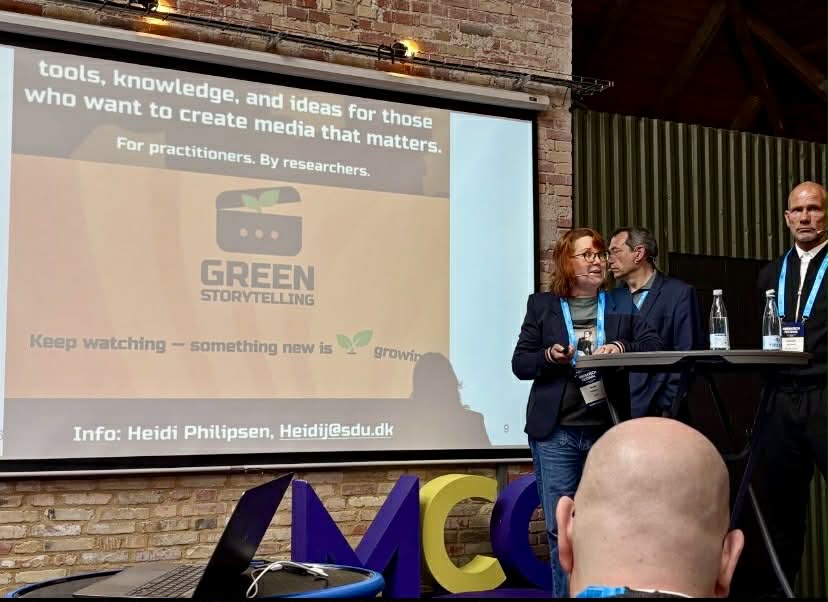
A well-known example is Erinn Brockovich, or Fanny in Families like ours. So, when we talk about sustainability in media, it may be useful to consider not only the footprint behind the camera, but also the imaginative worlds we place in front of it. Screenwriters carry a responsibility here — not only producers and production companies do. Many of the sustainable choices are actually made at the script stage: How many night scenes you include. Whether your main character shops second-hand and drink oat milk, or not, and so on. And elements of sustainability can appear in a story in different ways — explicitly, implicitly, or through production-related choices. Stories do not necessarily have to foreground climate crises, to make a difference. So, it’s important that we don’t simply pass the responsibility on to producers or green managers. Sustainability should be thought of holistically — from the very first idea to the final production — and by the whole team. And the whole ecosystem in the media industry. Educational institutions also play a role in the ecosystem, including SDU. We help to train the next generation of media professionals. And as researchers we can make our knowledge visible to the media industry. Right now, we are building up a website highlighting knowledge and tools on Greenstorytelling.dk. We ALL have a responsibility to contribute to sustainability. Thank you!
From Heidi