Green Dogmas in Media Production – from a student perspective
Helena Mervartová
I (as a student) participated in an EPICUR summer course called ‘Green Dogmas in Media Production’ at the University of Southern Denmark in Odense, which brought together students from different European universities, different nationalities and different academic backgrounds. We were introduced to the topic of sustainability in the production of media as well as sustainability communicated through media.
In order to pass this course we had to create a short film, or another type of short media production, that would be created with sustainability goals and green dogmas in mind and which would address a paradox connected to sustainability. The course took place during the summer holiday, divided into three online sessions in July and a so-called Production week in person in Odense.
Online Sessions
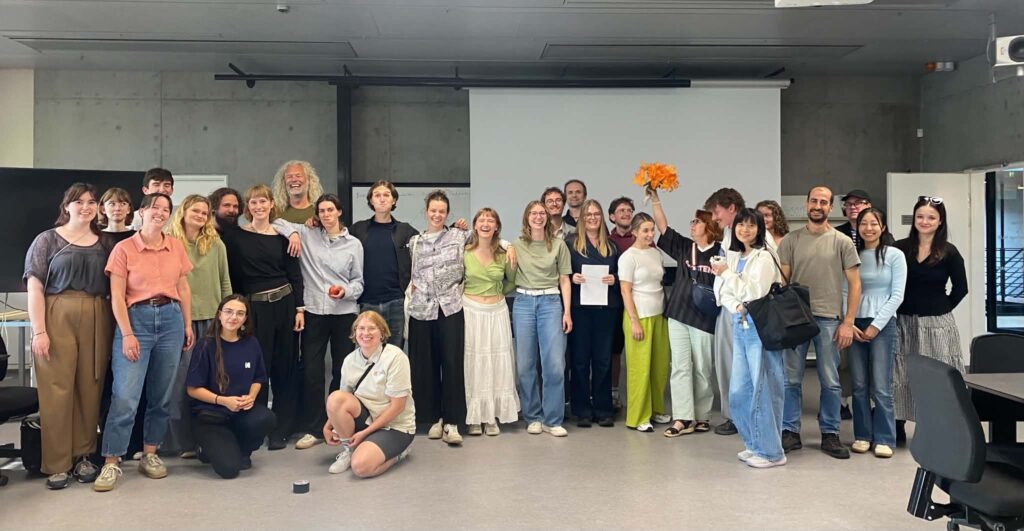
During three online sessions throughout July, we started with the theoretical part of the syllabus, we were divided into teams, and we got information about what to expect from the production week in Odense.
During the very first online meeting, the teachers introduced us to the green dogmas set for our film production and how to work with them. It was a list of guidelines that created certain limitations for our production. Their goal was to ensure that the production would be carried out with low CO2 emissions. For example, the use of artificial light was restricted or we were obliged to use only low-emission modes of transport when creating our short film. Many groups set their own restrictions to try to achieve even more sustainable production by sticking to a vegetarian or vegan diet throughout the week, or limiting the use of AI.
Production Week
The evening before the production week started, we had the opportunity to meet in an informal environment at a café to get to know the other members of our teams and to meet our teachers. It definitely helped me to feel a bit more relaxed about working with the others on our final project.
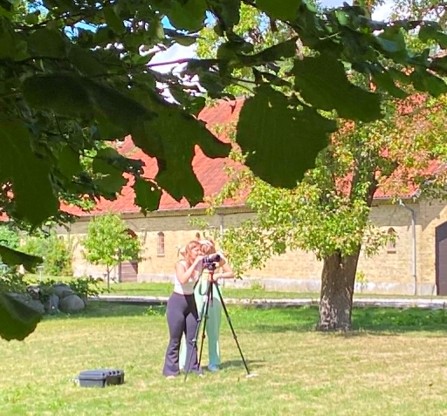
During week 32, we met in Odense to use the theoretical knowledge we gathered to create our short films. The first day was dedicated mostly to a tour around the university, practical information and work on the final project. The second and third days included not only work on our final project but also a lecture that helped us gain relevant knowledge of theories and terminology that we could later use in our final project. Our short film had to be accompanied by a portfolio consisting of a description of the production process and supported by a relevant theory from the texts on the syllabus of the course.
During the week, we were visited by a screenwriter, Veronica Almen Keyzer, who showed us her short film called The Last Strawberries and talked about sustainability within the production process. We had time to discuss the film with her while enjoying some pizzas. It was a very inspiring moment to see a person creating a film with the same set of values and limitations as we were about to do during the following days.
The week was very intense, filled with a lot of work on our final projects and an equal amount of support from our teachers. We received feedback on our scripts from two screenwriting students who dedicated 30 minutes to each group to make sure that their script could be translated into film language.
One afternoon was solely dedicated to workshops. We had the opportunity to get familiar with all the technical equipment provided by SDU for our filming days. And those members of the groups who took on the role of a Green Manager were introduced to the software ‘Green Producers Tool’, a tool that can be used to measure the CO2 emissions of a film production or other cultural events.
During the night before the hand-in, we were provided with last-minute technical support and plenty of snacks to make us push through and finish with a short film we could be proud of.
The examination (the next and last day) consisted of presenting the short film and describing the process of its creation and the portfolio in front of the teachers, a censor, and the other teams. Teachers then had the opportunity to ask questions about the film and the theoretical information included in the portfolio connected to it.
On the final day, we had the opportunity to watch the films of other teams and to be present for their examination. In this way, we could see all the different angles that other teams decided to approach the green dogmas and sustainability paradoxes from. It was fulfilling to see people talk about their film, their production, and above all, their ideas. It was, of course, allowed to talk about what we were working on during the production week, and everybody had a faint idea about what the others were working on.
Nevertheless, the final version was often far from what was imagined only two days before. The restrictions set by green dogmas, technical possibilities and time limits all contributed to moments of sudden changes and compromises. It was exciting to hear the original ideas and see the final version they evolved into.
Reflections and Perspectives
Despite some initial doubts about my ability to contribute to the production of our short film, I was surprised by how much work there is in a media production that has nothing to do with cameras or sound design, and where all open-minded people can contribute whatever background they are coming from and whatever experience they have with film production. There are many tasks during the entire production process, and in teams consisting of only a few members, you need to be open-minded and ready to take on a task without much hesitation. Given the structure of the course and the rather tight deadline, the production roles were often filled by someone with little experience. However, with the support of our teachers and also the support from our group members, all teams were able to proudly show their short films to others at the end of the week.
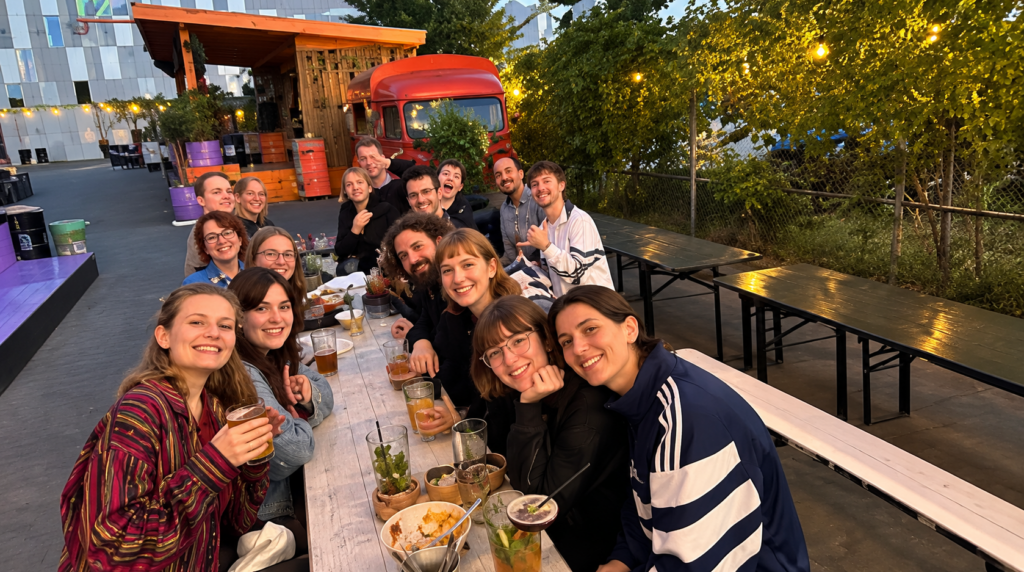
The cooperation with students from other universities and academic backgrounds was exciting and enjoyable. Everyone brought in different bits of knowledge, experience and artistic vision. For many, it was their first time in Denmark or at the SDU campus, which we had almost only for ourselves.
I am very grateful for this whole experience. I had never been part of a short production before, and so I learnt a lot about the whole process and all the different aspects that have to come together so that, in the end, a film is done. We worked a lot with the information and guidelines from this website. And hearing other people talk positively about the website made me very proud of this project, as it gave me a real-life example of how people found it helpful and educational.